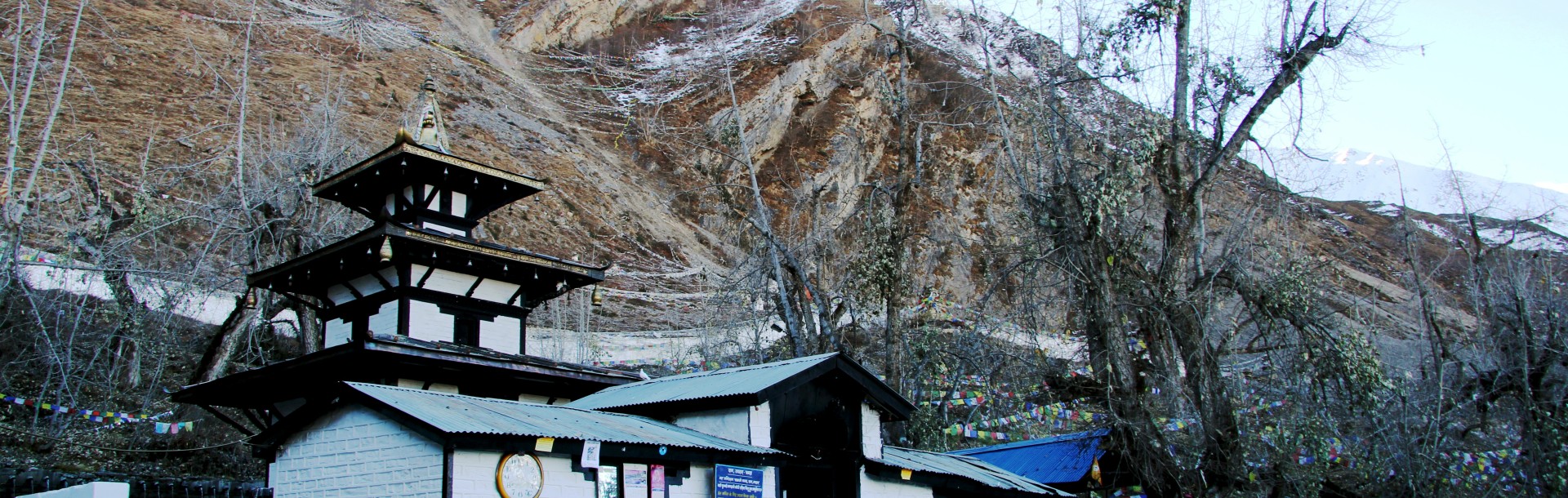
Why to visit Muktinath?
Muktinath is the most religious site for both Hindus and Buddhists. It lies in the Muktinath Valley at an altitude of 3,710 m in Mustang, Nepal. "Mukti" means “salvation,” and "Nath" means “God.” In Hinduism, Muktinath is popularly known as “Mukti Kshetra.” It means that all the sins people have committed will be removed if one visits the temple. It is also one of the 51 Shakti Peeths. For Tibetan Buddhists, Muktinath is a very important place of Dakinis—goddesses known as Sky Dancers—and one of the 24 Tantric places. They understand the statue to be a manifestation of Avalokiteśvara, who embodies the compassion of all Buddhas.
We at Duke Nepal Adventure are the best trip planners for the Muktinath tour.
Here are reasons why to visit Muktinath, one of the most religious places of Nepal:
A Religious Place:
Muktinath is a famous religious place for Hindus and Buddhists. It is the most sacred place where people believe that all the sins they have committed will go away if they visit the temple once in their lifetime. For Buddhists, it is sacred as the statue in the temple is the manifestation of Avalokiteśvara.
Kunda (Ponds):
There are two ponds in front of the temple named Laxmi Saraswati Kunda, also called Mukti Kunda. People believe that all sins will go away by taking a dip in the pond.
Mukti Dhara:
- There are 108 waterspouts (Dhara) named “Mukti Dhara” beside the temple.
- The 108 faucets, cast in the shape of bulls’ heads, pour forth sacred water.
- Pilgrims who visit the temple take a holy bath in each of these spouts.
- The water is very cold, so it requires strong desire and courage to take a holy bath there.
- Hindu devotees believe bathing here brings salvation.
- The deity is believed to have originated from Jumla, far western Nepal.
- The Yar Tang Mala festival is celebrated here during Janai Purnima by Buddhists.
Mharme Lha Khang Gompa:
- Situated north of Muktinath Temple.
- Visit after completing the Pooja at Muktinath Temple.
- The name means “Thousand Holy Lamps.”
- Dedicated to Guru Rimpoche (Padmasambhava) with his clay image at the altar.
- Includes Bon deities: Red Trakpo (right) and Blue Singe Doma (left).
- Singe Doma, a lion-headed deity, corresponds to Hindu Narasimha, hence also called Narsingh Gompa.
Shaligram:
- Sacred black stone fossils found in the Kali Gandaki River.
- May be found quickly or after long searching.
- Available for purchase from locals.
- Considered sacred and kept in home prayer rooms.
- Symbolizes Lord Vishnu.
Other notable sites include Gomba Samba, a newly built monastery, and Jwala Mai Temple, which are also popular attractions.
Book your seats for the Muktinath Tour with Duke Nepal Adventure now at:
???? +977 9851197286 | +977 1 4420222 | +977 1 4420223