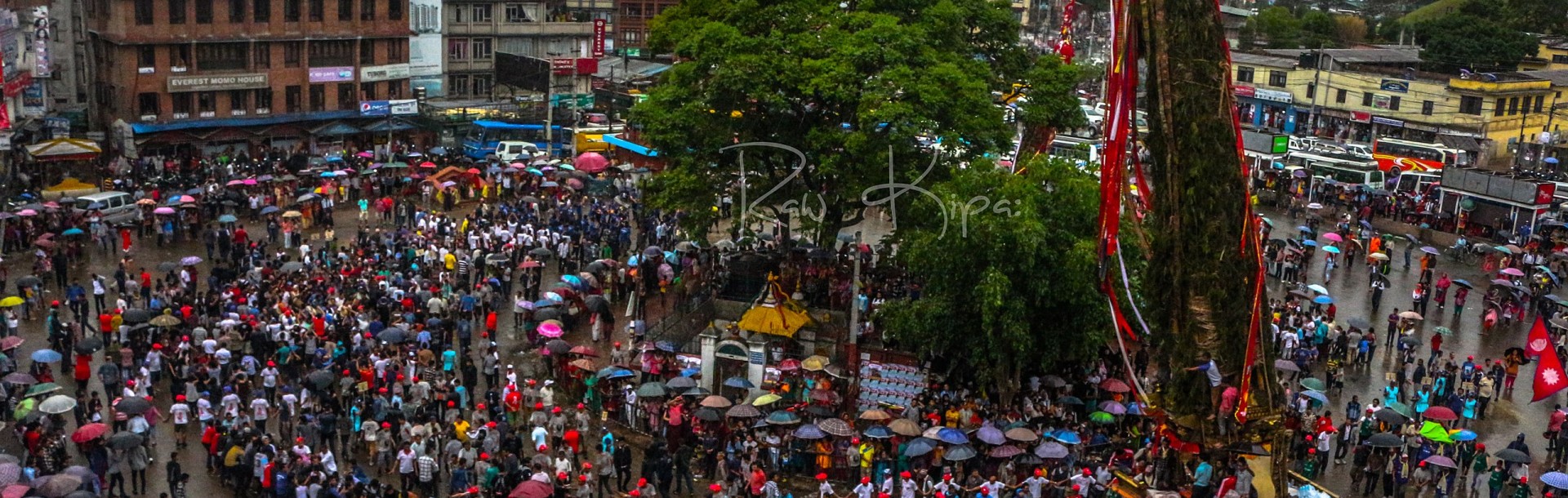
Happy Rato Machindranath Jatra!
✅ Rato Machindranath Jatra
Rato Machindranath Jatra is one of the longest chariot-pulling festivals of Patan. It lasts for a month and takes place sometime during April-May. Machindranath (or Bunga Dyah in Newari) is the god of rain. The name Rato Machindranath is derived from the red color of the deity's idol. This festival is one of the oldest and longest festivals celebrated in Patan. During the procession, the image of Bunga Dyah is placed on a tall chariot about 65 feet high and pulled in stages through the streets of Patan for a month.
Every Jatra has its own story. This Jatra tells the story of a saint brought from Assam by a farmer to bring rain to the valley. Different writers have collected various accounts of him. The story says Machindranath is the god of rain, and the Jatra is celebrated just before the monsoon season starts so the city will receive plenty of rainfall for the growth of crops. There are many interesting aspects of this Jatra. One of the main highlights is the coconut-dropping ritual. After reaching Lagankhel, one coconut is dropped from the top of the chariot. It is believed that if someone catches the coconut, their wishes will be fulfilled, they will be blessed with a baby boy, and they will have a good year ahead.
✅ More Information
This chariot-pulling festival ends with Bhoto Jatra in Jawalakhel. Like other stories, Bhoto Jatra has its own legend. According to the tale, Bhoto (a black velvet vest with precious jewel-like diamonds) was given to a farmer by Karkot Naga to cure his wife’s eye disease but was stolen. Later, while attending the Machindranath Jatra, the farmer spotted a person wearing the same vest. A fight broke out. Karkot Naga, who was in human form attending the Jatra, settled the quarrel and returned the Bhoto to Machindranath for safekeeping. Since then, every year, the Bhoto is shown to the general public with the question, "Whom does this Bhoto (vest) belong to?"
After the end of the Jatra, Rato Machindranath rests for six months in his temple.
Image: wikimedia.org