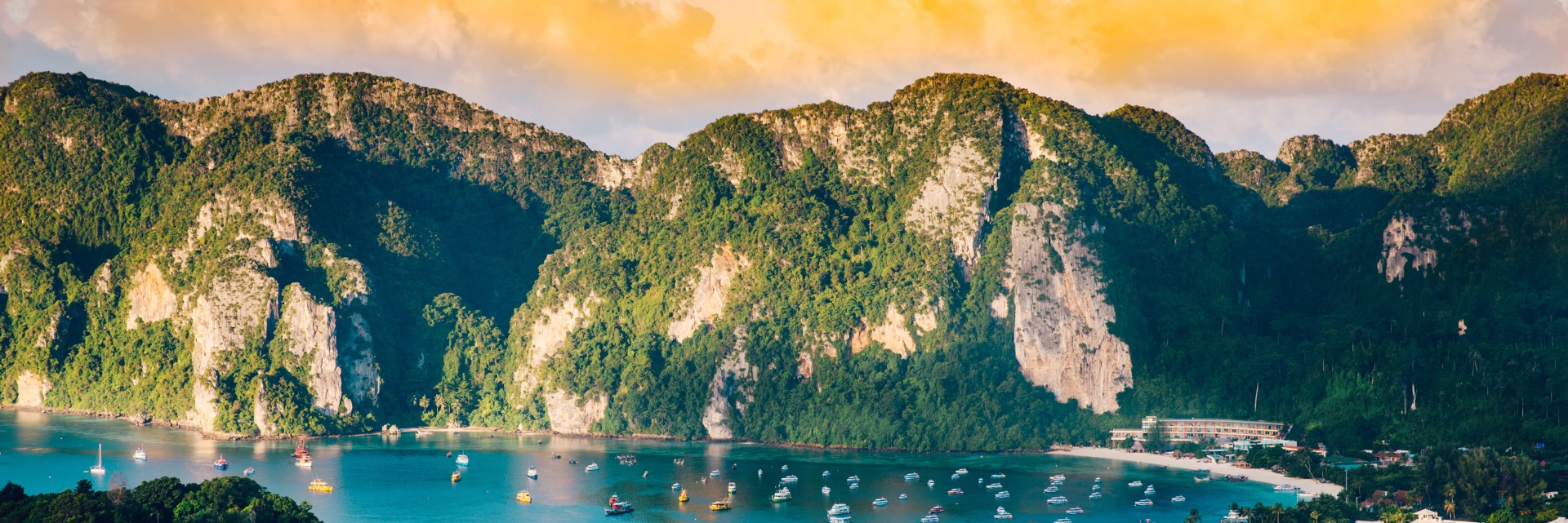
Thailand is always bustling with the movement of locals. The colorful bazaars, oversized monuments, floating markets, fascinating beaches, and many other attractions exist for you to enjoy. Thailand highlights a vibrant cultural scene alongside natural and architectural masterpieces that captivate visitors. These offerings make Thailand hard to forget.
✔️ Experience never-stopping markets in downtown Thailand.
✔️ Explore endless beautiful blue beaches.
✔️ Trek into tropical jungles.
✔️ Taste delicious Thai cuisine made from diverse ingredients.
✔️ Discover historical monuments and ruins dating back centuries.
✔️ Enjoy some of the world's best diving experiences.
Official Name: Kingdom of Thailand
Meaning of the Name: Thailand means “Land of the Free”
Capital: Bangkok (Krung Thep), which translates to “City of Angels”
Geography: Thailand lies in the heart of mainland Southeast Asia. It features green mountains, hills, plains, and a long coastline along the Gulf of Thailand and the Andaman Sea. It borders Myanmar and Laos to the north, Laos to the east, Cambodia to the southeast, and Malaysia to the south. The country stretches about 1,600 km north to south and 870 km east to west.
Area: 514,000 sq. km of land area. The maritime economic zone covers 72,200 sq. km in the Andaman Sea and 140,000 sq. km in the Gulf of Thailand, totaling 212,200 sq. km.
Population: Approximately 64.1 million people, a multi-ethnic society.
Climate: Ranges from subtropical to tropical with three seasons: hot and dry (Feb–May), monsoon (Jun–Oct), and cool dry season (Nov–Jan). Average temperatures range from 23°C to 32.2°C.
Language: Thai is the national and official language, a tonal language with regional dialects. Chinese and Malay are also spoken in some areas. English is widely spoken and taught as a compulsory subject in schools.
Currency: Thai Baht (THB). Banknotes come in denominations of 20 Baht (green), 50 Baht (blue), 100 Baht (red), 500 Baht (purple), and 1,000 Baht (brown). Exchange rates fluctuate daily.
National Flag: Five horizontal stripes of red, white, and blue symbolizing national unity, religious purity, and the respected monarchy.
Religion: Buddhism is the primary religion, followed by over 90% of the population. Other religions include Christianity, Hinduism, Islam, and Sikhism.
The best time to visit Thailand is between November and February when the weather is cooler and dry, ideal for sightseeing and outdoor activities.
✔️ Fitness Level: Low to moderate; suitable for most travelers.
✔️ Medical Check-up: Recommended if planning trekking or adventure activities, especially in mountainous regions.
✔️ Buddhism shapes much of daily life and festivals.
✔️ Respect for monarchy and religious customs is vital.
✔️ Traditional greetings (wai) and modest dress in temples are appreciated.
✔️ Pack light cotton clothing, sun protection, and comfortable footwear.
✔️ Stay hydrated and try local fruits and street foods.
✔️ Use reputable transport and tour operators.
✔️ Learn basic Thai greetings and customs to enhance interactions.
✔️ Support sustainable tourism by respecting nature and wildlife.
Thailand is rich in history spanning centuries and has an exotic culture. Thailand welcomes its visitors with arms wide open into tropical beaches, bustling cities, and the world-famous cuisine and culinary delights. The offerings of Thailand are overwhelming, and here are some of the best places to visit:
Chiang Mai offers a fresh outlook compared to the bustling cities. You will enjoy the serene mountainous landscapes and historical temples like Wat Phra Sing and Wat Chedi Luang. The Chiang Mai Night Bazaar is one of the oldest and most popular night markets. Don’t miss visiting the Elephant Nature Park to meet Thailand's gentle giants. Nearby, explore Doi Suthep for panoramic city views and hill tribe villages for cultural immersion.
The capital city is a bustling mix of modern and ancient attractions, including the Jim Thompson House and temples like Wat Arun and Wat Pho. Bangkok is home to the world’s largest street markets, such as Chatuchak Weekend Market, and boasts over 300,000 street food stalls. Experience the vibrant nightlife in Sukhumvit or Khao San Road, and explore the Grand Palace for Thailand’s regal history.
Phuket is Thailand’s largest island, famous for turquoise beaches and white sands. Explore Patong Beach and nightlife or the island’s inland area for authentic local culture. A boat tour to nearby islands for swimming, scuba diving, or snorkeling is a must. Visit Big Buddha and the Old Phuket Town for cultural highlights.
Trang offers tranquil beaches and islands less frequented by tourists. Lush jungles, limestone mountains, crystal-clear waters, and white sands create an unforgettable setting. Enjoy island hopping, swimming in hidden caves on Ko Mook, and hiking through Ko Ngai’s jungles while exploring local culture across ten districts.
Railay Beach features stunning sands perfect for relaxation. Railay West and Phra Nang Beach have luxury resorts with breathtaking limestone cliffs, while Tonsai Beach is more budget-friendly and laid back. Nightlife flourishes in the eastern part of Railay. The area is also popular for rock climbing enthusiasts.
A UNESCO World Heritage Site, Ayutthaya was the ancient kingdom’s capital and offers spectacular temples, statues, monasteries, and ruins. Key attractions include Bang Pa-In Palace, Wat Lokaya Sutha, Wat Phra Si Sanphet, and Wat Chaiwatthanaram, famous for its 120 sitting Buddha statues. Don’t miss the floating market and souvenir shopping.
Recovered from the 2004 tsunami, Phang Nga offers serene natural beauty, especially at Surin Island Marine National Park. Visit between November and February for hiking, diving, and exploring James Bond Island in the stunning Phang Nga Bay. Kayaking through limestone caves is a highlight.
This national park on the coast of Phang Nga is a paradise for scuba divers with vibrant marine life and coral reefs. Look out for Nicobar pigeons and roseate terns. The park closes during the monsoon season.
Known as Elephant Island, Ko Chang features stunning coastlines, small towns, and jungle interiors with waterfalls. Trekking here unlocks the island’s full natural charm. Snorkeling and elephant trekking tours are popular activities.
Home to limestone cliffs, waterfalls, and the world's oldest evergreen rainforest, this biodiverse park hosts tigers, elephants, and 300 bird species. The best visiting season is December to April. Stay in floating raft houses on Cheow Lan Lake for a unique experience.
Famous for stunning beaches and vibrant party scenes, Phi Phi Don is lively with diving and snorkeling spots. Phi Phi Leh offers untouched white sand beaches and serene natural beauty. The islands gained fame from the movie “The Beach.”
Located 100 miles southeast of Bangkok, Pattaya offers sunbathing, water sports, and cultural attractions like the Paradise Interactive Art Museum and Sanctuary of Truth. The bustling walking street is famous for nightlife with bars, restaurants, and nightclubs. Nearby Coral Island (Koh Larn) is perfect for day trips.
This exotic park spans 31,000 acres with sea cliffs, rainforests, mountains, and diverse wildlife. Visitors can hike, swim in waterfall ponds, or relax on sandy beaches. It is a gateway to the Similan Islands and offers a quieter alternative to Phuket.
A UNESCO World Heritage Site, Sukhothai was Thailand’s first capital. The park contains well-preserved ruins of temples and monuments that showcase early Thai architecture and art, providing insight into the country's rich history.
A charming seaside resort town favored by both locals and tourists, Hua Hin offers beautiful beaches, night markets, golf courses, and the historic Hua Hin Railway Station. It's perfect for a relaxing getaway with modern amenities.
Thailand offers a wide range of exciting activities to suit every traveler’s taste. Here are some of the must-try experiences:
Visitors can apply for a visa at the Embassy every working day (Monday-Friday) from 09:00 to 12:00 hours.
Normally, it takes two working days for the issuance of a visa.
For more information on the visa application process, please refer to the Citizen’s Charter.
Note: All foreigners, except Indian nationals, need visas to visit Nepal. Most visitors can also obtain visas from entry points to Nepal, including Tribhuvan International Airport, Kathmandu, on arrival.